
News Center

Scientists rediscover 'lost planet' more like the ones in our own solar system
View: 1022 times / Time: 2020-07-22
Exoplanets, those mysterious planets that dwell outside of our solar system, are always fascinating, but humanity is particularly interested in those located in their stars' habitable zones where liquid water might exist. A new method for detecting exoplanets could help scientists spot many more of these intriguing, distant worlds.
A planet named NGTS-11b is the poster child for this new technique. A team of researchers led by Samuel Gill of the University of Warwick in the UK rediscovered the planet by starting with data from NASA's planet-hunting TESS telescope.
This is a cosmic detective story. TESS first located the planet by seeing a subtle dip in brightness when it crossed in front of its star. But TESS only stares at a section of space for a limited period of time, usually 27 days. Scientists like to observe two dips in brightness to confirm an exoplanet's existence, but some of those planets take longer than 27 days to circle back around.
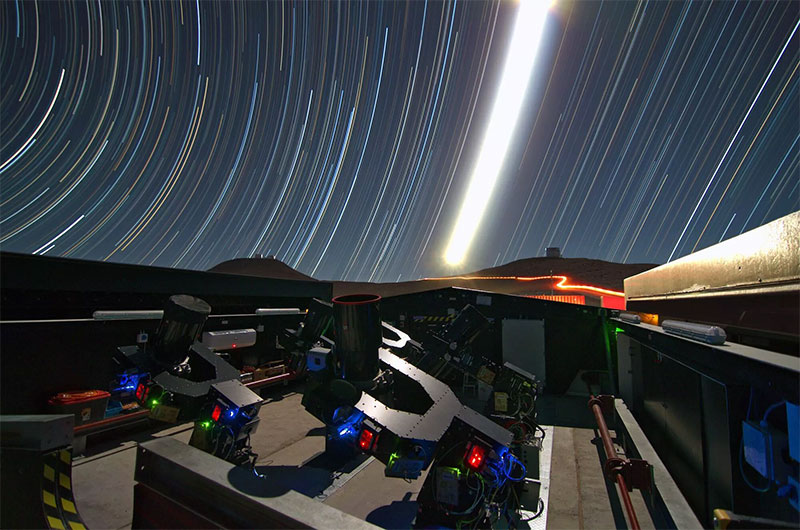
This is where the Next-Generation Transit Survey (NGTS) telescopes in Chile come into play. NGTS conducted a follow-up observation on the star, which is 620 light-years away, but watched it for 79 nights. The researchers were able to log two dips in brightness, effectively rediscovering NGTS-11b, which travels around its star every 35 days.